
The Costco Vendor Consulting 2026 Guide: What Every Supplier Needs to Know Before the First Buyer Conversation — and Why MOJO's 20 Years Make the Difference

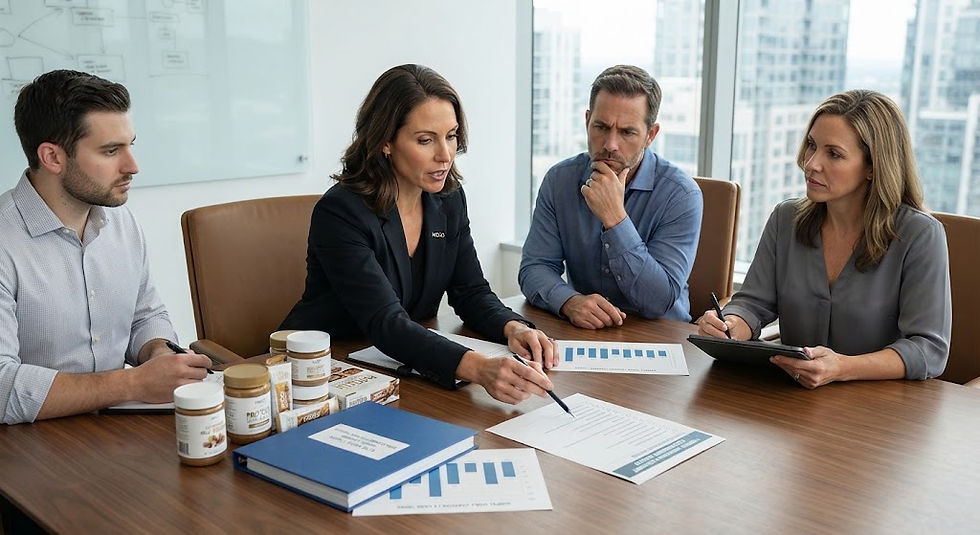
Costco vendor consulting 2026 begins with a question that most aspiring Costco suppliers do not ask themselves before approaching the buyer — and that MOJO Sales & Branding asks every prospective brand client before accepting the engagement: is your brand actually ready to be a Costco vendor?
The question is not about product quality. Most products that reach the point of seeking Costco authorization are genuinely good products — the quality threshold that distinguishes a Costco-caliber product from a standard retail product is not the primary barrier that stops brands from achieving and sustaining Costco vendor status.
The question is about the ten specific dimensions of vendor readiness that the Costco buying process evaluates — dimensions that the brand without institutional consulting experience does not know exist until the first buyer conversation reveals their absence.
The supply chain capacity that cannot meet Costco's volume requirements. The quality assurance documentation that the buyer's compliance team requires before the first purchase order. The labeling specifications that Costco's own format standards demand and that most brands' existing packaging does not meet. The insurance and liability coverage minimums that the Costco supplier agreement requires. The EDI (Electronic Data Interchange) capability that Costco's operational systems expect from every authorized supplier.
The brand that discovers these requirements in the buyer meeting has already lost the first impression that the buyer relationship's long-term trajectory depends on. The brand that discovers these requirements through MOJO's vendor readiness assessment before the first buyer conversation arrives prepared — and communicates the specific institutional competence that the buyer's commercial confidence requires.
This guide covers the ten vendor readiness dimensions that MOJO's consulting process assesses for every prospective Costco brand client — and explains why addressing each before the first buyer conversation is the most commercially productive investment the aspiring Costco supplier can make.
The Ten Vendor Readiness Dimensions
Dimension 1: Supply Chain Capacity
The first and most frequently underestimated vendor readiness dimension: production capacity. The brand that can produce 5,000 units per month for its current retail channel needs to produce 50,000 to 500,000 units per month to sustain Costco channel demand at full authorization.
The specific capacity calculation that MOJO's vendor readiness assessment works through: take the target warehouse count for the initial authorization (typically a regional pilot of 50 to 150 warehouses), multiply by the projected weekly unit velocity per warehouse (typically 30 to 100 units per week for food and beverage, varying significantly by category), and multiply by the annual weeks of the promotional calendar. A 100-warehouse authorization at 50 units per week generates 260,000 units per year — before counting the roadshow events that spike velocity to 5 to 10 times the standard weekly rate during their five-day windows.
The brand whose production facility cannot reliably supply this volume — on time, at consistent quality, at the cost structure that the Costco pricing architecture requires — is not yet ready for Costco vendor status regardless of the product's commercial merit.
MOJO's capacity assessment identifies the specific production bottlenecks, co-manufacturing options, and capacity expansion investments that the brand needs to address before approaching the Costco buyer with confidence in its supply commitment.
Dimension 2: Quality Assurance Documentation
The Costco buying team's compliance requirements for new supplier authorization include the specific quality assurance documentation that the member trust foundation of the Costco brand demands of every product in the warehouse.
The specific QA documentation that MOJO's vendor readiness assessment reviews and prepares:
Third-party food safety certification: the SQF (Safe Quality Food), BRC (British Retail Consortium), or FSSC 22000 certification that demonstrates the production facility's food safety management system meets the international standards that Costco's supplier compliance team requires. The brand whose production facility is not third-party certified for food safety has a specific, quantifiable remediation requirement before Costco vendor status is achievable.
Product liability insurance with minimum coverage levels: Costco requires suppliers to carry product liability insurance with minimum coverage levels specified in the supplier agreement. The brand that carries the minimum insurance its current retail channel requires may need to increase coverage to meet Costco's minimums.
Country of Origin documentation: the specific supply chain documentation that verifies the product's ingredients or components comply with Costco's country of origin labeling requirements and, where applicable, with the trade compliance requirements that the specific ingredient or component sourcing geography involves.
Dimension 3: Labeling and Packaging Compliance
Costco's labeling requirements are specific, detailed, and different in several important ways from the general retail labeling standards that the brand's existing packaging meets.
The specific labeling dimensions that MOJO's compliance review addresses:
The Costco item number (the specific SKU identification system that Costco's internal assortment management uses) must appear on the product packaging in the location and format that Costco's packaging specifications define.
The nutritional panel format and size requirements that Costco's own style standards require — which may differ from the FDA minimum requirements that the brand's grocery channel packaging meets.
The allergen declaration format and placement that Costco's specific labeling standards require — the prominent, clearly formatted allergen disclosure that the member community's food safety awareness demands.
The UPC and barcode specifications that Costco's point-of-sale and inventory management systems require — which must meet the specific GS1 standards and placement requirements that the warehouse's scanning infrastructure expects.
Dimension 4: EDI Capability
Costco's operational systems require suppliers to communicate purchase orders, shipping confirmations, invoices, and inventory data through EDI — the specific electronic data interchange protocol that the warehouse's supply chain management infrastructure uses to manage the product flow from supplier to receiving dock to warehouse floor.
The brand without EDI capability is operationally incompatible with Costco's supplier management system. The brand with EDI capability — whether through an in-house EDI system or through a third-party EDI service provider — is operationally ready for the specific electronic communication requirements that Costco's purchase order and logistics management expects.
MOJO's vendor readiness assessment identifies the brand's current EDI status and, where capability is absent, recommends the specific EDI service providers whose Costco-compatible systems can be implemented within the timeline the authorization process requires.
Dimension 5: Trade Compliance and Import Requirements
For the brand whose ingredients, components, or finished products involve international supply chains, the 2026 trade environment — including the IEEPA tariff structures, the country of origin verification requirements, and the specific trade compliance documentation that Costco's compliance team requires for imported products — creates a specific vendor readiness dimension that domestic-supply brands do not face.
The specific trade compliance areas that MOJO's vendor readiness assessment covers for brands with international supply chains:
HTS (Harmonized Tariff Schedule) classification verification: the specific tariff classification that determines the duty rate on imported ingredients or finished products, and the verification that the brand's current classification is accurate and defensible under the 2026 regulatory environment.
Country of origin marking compliance: the specific marking requirements for imported products and ingredients that U.S. Customs and Border Protection and Costco's own compliance team require.
Supply chain documentation: the specific import documentation — commercial invoices, certificates of origin, packing lists — that Costco's receiving and compliance processes require for imported products.
Dimension 6: Minimum Order Quantity Economics
The Costco purchase order structure — the specific minimum order quantity, the delivery schedule, and the payment terms that the supplier agreement establishes — creates specific cash flow and working capital requirements that the brand's financial structure must accommodate.
The specific MOQ economics that MOJO's financial readiness assessment reviews: the capital required to produce and deliver the first purchase order before receiving payment (Costco's payment terms are typically net 30 days from invoice, meaning the supplier must finance 30 days of Costco inventory), the minimum batch size that the production facility's economics require (which must be compatible with the warehouse's delivery schedule and the inventory turnover rate that the product's velocity generates), and the buffer inventory requirement that the demand variability the Costco channel creates necessitates.
Dimension 7: Returns and Recall Protocol
Costco's member-facing return policy — the satisfaction guarantee that allows members to return virtually any product for any reason — creates a specific supplier responsibility that the supplier agreement formalizes: the supplier's obligation to accept and credit the returns that the member's Costco return generates.
The specific return and recall protocol readiness that MOJO's assessment covers:
The supplier's internal returns processing capability — the system for tracking, crediting, and analyzing the returns that the Costco channel generates, and the quality management process that investigates returns exceeding normal statistical variance as potential quality signal.
The mock recall protocol — the specific internal process simulation that the supplier performs to verify its capability to execute a product recall with the speed and completeness that the FDA's recall requirements and Costco's own supplier recall protocol demand.
Dimension 8: Costco-Specific Packaging and Display Requirements
The physical packaging and display requirements that the Costco warehouse's operational environment imposes are specific, detailed, and different in important ways from the packaging that the grocery or specialty retail environment requires.
The stackable stability requirement: Costco's warehouse storage and display configuration stacks product pallets to heights that the product's structural packaging must withstand without compression failure. The brand whose packaging was designed for single-layer shelf display may require structural reinforcement or engineering modification to meet the Costco stacking requirement.
The club-ready packaging specification: the outer packaging that the member physically handles — the multi-pack case, the display-ready pallet configuration, the club-format package — must meet the specific dimensional, weight, and handling characteristics that the Costco warehouse's operational workflow requires.
Dimension 9: Promotional Commitment Readiness
The Costco channel's ongoing commercial relationship requires the supplier's participation in the promotional calendar — the coupon book promotions, the seasonal pricing events, the roadshow schedule, and the Holiday Savings Book participation — that sustains the product's velocity between standard shelf placement periods.
The promotional commitment readiness assessment that MOJO conducts with prospective brand clients covers: the margin structure's ability to absorb the coupon book promotional discount (typically 15 to 25 percent off the regular retail price) while remaining commercially sustainable, the roadshow budget capacity for the ongoing event schedule that Costco's buyers expect from authorized suppliers, and the advance planning and booking process for coupon book participation that requires submissions six to nine months before the promotional period.
Dimension 10: Organizational Commitment and Costco-Specific Resources
The tenth and most frequently overlooked vendor readiness dimension: the brand's organizational commitment to the Costco channel — the specific internal resources, the executive attention, and the institutional knowledge investment that successful Costco vendor status requires.
The Costco channel is not a passive distribution arrangement. It is an active, relationship-driven commercial partnership that requires ongoing buyer communication, promotional calendar management, roadshow execution, velocity monitoring, and the organizational responsiveness that the buyer's expectations demand.
The brand that approaches Costco vendor status as an additional revenue stream to be managed alongside its other channels with existing team capacity is consistently disappointed by the result. The brand that treats the Costco channel as the primary commercial priority — investing the organizational attention, the promotional budget, and the institutional expertise that MOJO's consulting service provides — consistently discovers that the Costco channel's commercial return justifies exactly that level of commitment.
The MOJO Vendor Readiness Assessment: What the Process Looks Like
The Initial Engagement
MOJO's vendor readiness assessment begins with a comprehensive initial consultation — the specific conversation in which MOJO's consulting team reviews the brand's current commercial status across all ten vendor readiness dimensions and identifies the gap between the brand's current capabilities and the specific requirements that Costco vendor authorization demands.
The initial consultation covers the brand's production capacity and co-manufacturing relationships, its current quality assurance certification status, its packaging and labeling compliance, its trade and import documentation, its financial readiness for the MOQ economics and promotional budget, and its organizational commitment and resource availability.
The Gap Analysis and Remediation Plan
The initial consultation's output is the specific gap analysis — the documented list of the dimensions where the brand's current capabilities fall short of Costco's requirements, ranked by the time and investment required to close each gap, and organized into the remediation sequence that most efficiently moves the brand from current status to vendor readiness.
The gap analysis produces the specific timeline — typically three to nine months for brands with significant capability gaps across multiple dimensions, or as few as four to six weeks for brands with most dimensions in place and only labeling compliance and EDI setup remaining — that the vendor readiness preparation requires before the first buyer conversation is commercially productive.
The Buyer Conversation Preparation
With the vendor readiness gaps closed, MOJO's consulting process moves to the buyer conversation preparation — the specific commercial narrative, velocity projection, and supply commitment documentation that the first buyer meeting requires — and introduces the brand through the institutional relationship channel that MOJO's 20 years of Costco buyer engagement has developed.
The brand that has completed MOJO's vendor readiness assessment arrives at the first Costco buyer conversation having answered every question the buyer will ask before the buyer asks it — and having communicated, through the preparation quality itself, the institutional competence that serious Costco channel partners demonstrate.
📞 732.433.7873 | 📧 Susan@MOJOSalesandBranding.com | 🌐 www.mojosalesandbranding.com
Costco Vendor Readiness 2026 — The MOJO Ten-Dimension Checklist:
Dimension | What Costco Requires | Common Gap | MOJO Solution |
Supply chain capacity | Volume for authorization scope + roadshow spikes | Production ceiling below Costco demand | Capacity assessment + co-manufacturing identification |
QA documentation | SQF/BRC/FSSC + product liability insurance | Missing third-party certification | Certification roadmap + insurance review |
Labeling compliance | Costco-specific format + UPC + allergen | Grocery packaging doesn't meet Costco spec | Full packaging compliance audit |
EDI capability | Electronic order/invoice communication | No EDI system in place | EDI provider identification + implementation |
Trade compliance | HTS classification + COO documentation | Import documentation gaps | Supply chain documentation review |
MOQ economics | Financial capacity for first PO + 30-day terms | Working capital insufficient | Financial readiness assessment |
Returns protocol | Return acceptance + recall capability | No mock recall process | Recall protocol development |
Physical packaging | Stackable stability + club-format spec | Grocery packaging fails stacking | Structural packaging engineering review |
Promotional commitment | Coupon book + roadshow budget + lead time | Margin insufficient for promotional discount | Promotional economics modeling |
Organizational commitment | Active channel management + buyer responsiveness | Insufficient internal Costco resources | MOJO fractional service integration |
#CostcoVendorConsulting2026 #CostcoVendor2026 #CostcoSupplierConsulting #MOJOSalesAndBranding #CostcoVendorReadiness #CostcoSupplier2026 #GetIntoCostco2026 #CostcoCPGBrand2026 #CostcoBuyerPrep2026 #CostcoCompliance2026 #CostcoQA2026 #CostcoEDI #CostcoLabeling2026 #CostcoPackaging2026 #CostcoChannelEntry #SusanBarryMOJO #CostcoBuyer2026 #CostcoAuthorization2026 #CostcoVendorPrep #CostcoBrandConsulting2026


Comments