
Kirkland Signature 2026: What $90 Billion in Private Label Sales Means for Every CPG Brand in the Costco Channel

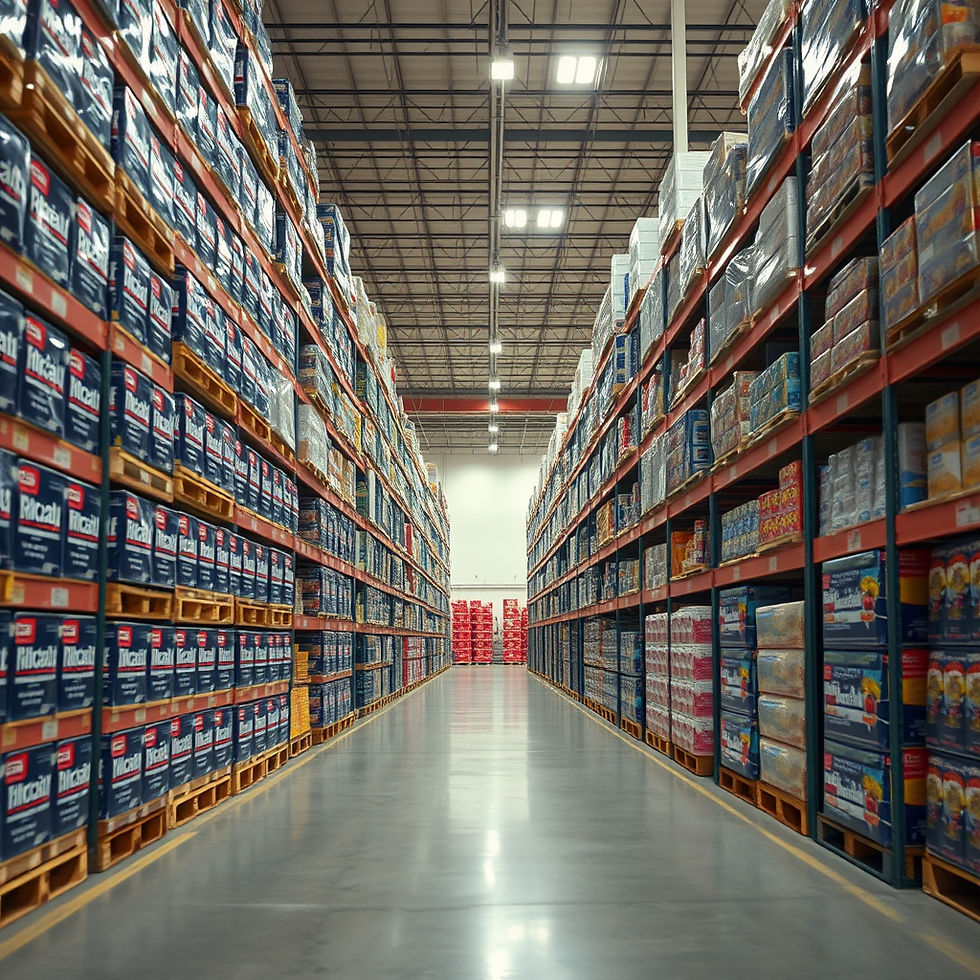
Stop what you are doing and read this number carefully: $90 billion.
That is how much Kirkland Signature — Costco's private label brand — generated in total sales in 2025 alone, according to a report delivered at Costco's 2026 Annual Meeting of Shareholders. That represents a staggering $15 billion increase over Kirkland Signature's 2024 sales figures.
During Costco's Q2 2026 earnings call, CFO Gary Millerchip said: "Kirkland Signature remains a top focus to deliver great value for our members, with KS items typically offering 15% to 20% value compared to the national brand alternative, with equal or better quality." Tastewise
For context: $90 billion makes Kirkland Signature the largest private label brand on earth by a margin that is not close. It makes it larger than most publicly traded consumer goods companies. It makes it a commercial institution in its own right — not a store brand, not a generic alternative, not a private label in the traditional sense — but a genuine consumer brand with institutional scale, institutional quality standards, and an institutional commitment to ongoing category expansion that every CPG brand in the Costco ecosystem must understand as the single most commercially consequential competitive reality in their channel environment.
Costco introduced over 30 new Kirkland Signature products in Q4 2025 alone, with plans to expand further in 2026. Tastewise
30 new Kirkland products in a single quarter. Across categories from apparel to consumables. In an environment where tariff pressures are pushing Costco's buying team to accelerate domestic Kirkland development as a specific strategic response to supply chain cost volatility.
This is the Kirkland Signature 2026 story — and for CPG brand founders and fractional brand managers building Costco channel strategies, understanding it completely is the foundational commercial intelligence requirement of the moment.
At Fractional Brand Managers, we track Kirkland Signature's expansion with the same intensity we bring to every competitive development that affects our clients' Costco channel positions. This guide translates the $90 billion story into the specific strategic intelligence every CPG brand needs to navigate, compete in, and win within the 2026 Costco channel environment.
The Three Dimensions of Kirkland's 2026 Expansion That Most Brands Are Missing
Dimension 1 — Category expansion into previously brand-dominated territory
Kirkland Signature's expansion into premium categories — such as organic foods and luxury skincare — has allowed Costco to cater to dual consumer demands: affordability and aspiration. Tastewise
The Kirkland Signature expansion of 2026 is not happening in the commodity categories where private label has always been strongest. It is happening in the premium, innovation-forward, story-rich categories where branded CPG companies have historically held the most durable competitive positions — organic foods, luxury skincare, functional nutrition, premium personal care, and specialty food.
This is a qualitatively different competitive challenge than private label competing on price alone in commodity categories. Kirkland's move into premium and aspirational categories means that branded companies competing in these spaces cannot rely on the "premium positioning protects us from private label" assumption that has historically provided a degree of commercial insulation. In 2026, Kirkland is not just cheaper. In an increasing number of categories, it is also premium.
The specific 2026 Kirkland Signature category expansions that every CPG vendor brand should audit against their own assortment position: premium skincare and beauty, organic and clean-label food products, functional nutrition and supplements, premium spirits and beverages, and sustainable household goods. If your brand operates in any of these categories, the Kirkland expansion is creating a competitive adjacency that requires a specific and deliberate strategic response — not generic "quality differentiation" positioning, but a specific and defensible claim that Kirkland's institutional development model cannot quickly replicate.
Dimension 2 — Domestic sourcing acceleration creates new Kirkland advantages
The company is reshaping its Kirkland Signature private label by increasing domestic sourcing to address tariff-related cost pressures. Tastewise
The 2026 tariff environment has accelerated an institutional Kirkland development priority that would have materialized over time regardless: domestic manufacturing. Costco's strategic pivot toward locally manufactured Kirkland products creates supply chain advantages — cost predictability, delivery reliability, regulatory compliance confidence, and the marketing credential of domestic provenance — that were not previously available to Kirkland's institutional development program.
For imported CPG brands competing in categories where Kirkland is developing domestic alternatives, this dimension of the expansion creates a specific competitive challenge: not only is Kirkland entering the category, it is entering with a domestic sourcing story that resonates with the 2026 consumer's growing preference for transparent, local, and tariff-insulated products.
Dimension 3 — Energy drink entry signals category expansion philosophy
Costco is also launching a Kirkland branded energy drink, targeting a lower price point than many national and in-store brands. Tastewise
The Kirkland energy drink announcement is the 2026 development that most clearly communicates Kirkland's category expansion philosophy: identify a category with demonstrated Costco member demand, identify the specific value gap between existing member pricing and what Kirkland's institutional buying power could deliver, and develop a Kirkland alternative that captures the demand at a more favorable member price point.
The energy drink market has been one of the most commercially dynamic consumer beverage categories of the past decade — driven by brands like Red Bull, Monster, Celsius, and Ghost that have combined genuine innovation with strong retail execution. Kirkland's entry into this category signals to every CPG brand in every beverage and functional food category: if your category has demonstrated member demand at Costco and the per-unit pricing creates room for a Kirkland alternative at 15 to 20 percent below your retail price, expect Kirkland to evaluate it.
What Kirkland's $90 Billion Does NOT Mean for Branded CPG Brands
Before the strategic response section, it is worth being specific about what the Kirkland expansion does not mean — because the most commercially damaging response to Kirkland's growth is either overcorrection or paralysis.
It does not mean that branded CPG brands cannot win at Costco.
The roadshow format is the branded brand's most powerful competitive weapon — and Kirkland does not get a roadshow. The live demonstration, the authentic brand story, the human connection between a knowledgeable brand representative and a genuinely curious Costco member — none of these commercial experiences are available to Kirkland Signature, regardless of its institutional scale. A branded CPG brand that enters the Costco roadshow with a genuinely excellent product, an authentic story, and a skilled sales team is creating a consumer experience that Kirkland simply cannot replicate.
It does not mean that innovation-driven brands are automatically displaced.
Kirkland products span everything from groceries to household goods, often priced well below national brands while maintaining comparable quality. That combination is a big reason shoppers keep renewing memberships and spending more money per visit. Tastewise
Kirkland's quality standard is consistently excellent — but its product development model is reactive, not generative. Kirkland develops alternatives to established branded products in proven categories. It does not create new categories, develop novel formulations ahead of consumer demand, or execute the kind of sensory innovation that generates the viral member enthusiasm that drives roadshow velocity. Branded CPG brands that position themselves at the genuine innovation edge of their categories — in formulation, delivery format, ingredient innovation, or consumer segment specificity — are operating in commercial territory that Kirkland's development cycle cannot reach in time.
It does not mean that member loyalty to specific brands is gone.
The presence of Kirkland Signature in nearly every product category reinforces the overall Costco experience. Beyond the tangible savings, Kirkland Signature plays a vital role in fostering a deep sense of loyalty and trust among Costco members.
But this institutional Kirkland loyalty does not crowd out specific brand loyalty — it coexists with it. The member who has been buying a specific premium hot sauce at Costco for five years because they discovered it at a roadshow and love it is not automatically converting to Kirkland's hot sauce alternative. Genuine brand loyalty — built through the roadshow discovery experience, reinforced through consistent product quality, and sustained through the kind of member advocacy that generates organic social media content — is more durable than the commercial analysis of Kirkland's scale might suggest.
The Five Strategic Responses That Win Against Kirkland in 2026
Response 1: Innovation positioning at the leading edge of category development
Kirkland's reaction timeline — twelve to eighteen months from category identification to product launch — is the branded brand's primary strategic window. The brand that creates a genuinely novel product innovation before Kirkland's development cycle can respond has the commercial floor to establish member loyalty, roadshow velocity data, and buyer relationship equity before the competitive alternative arrives.
The specific innovation dimensions that are most protected from Kirkland's reactive development model: formulation complexity (multi-ingredient functional products with clinical efficacy data that requires genuine research investment), cultural authenticity (products with specific cultural heritage that Kirkland's institutional manufacturing cannot genuinely replicate), and category-creating novelty (product concepts that do not yet have a Kirkland equivalent because the category is too new for Kirkland's reactive model to have identified it).
Response 2: The roadshow as the irreplaceable differentiation vehicle
In a warehouse increasingly defined by the Kirkland Signature value proposition, the brands that can show up live, demonstrate their superiority, and connect authentically with members are the ones that earn lasting loyalty. Not shelf loyalty — real, intentional brand loyalty that survives and thrives even when a Kirkland alternative sits three aisles over.
The roadshow is the format where branded brands have their most powerful competitive advantage over Kirkland — and the format where investment in excellent execution, authentic brand representation, and compelling product demonstration generates the highest commercial return relative to Kirkland's institutional competition. Every dollar invested in roadshow excellence is a dollar invested in the one commercial dimension where Kirkland cannot compete.
Response 3: Story specificity that Kirkland's institutional scale cannot match
Kirkland offers quality products at lower prices than national brands. Recent changes to the Kirkland line are apt to benefit Costco as well as its customers. Tastewise
Kirkland's institutional advantage is quality at institutional scale. Its structural limitation is story — it cannot tell the story of a specific founder, a specific farm, a specific cultural heritage, or a specific health journey that created the product, because there is no such story. Every branded CPG brand has a story that Kirkland structurally cannot replicate.
The branded CPG strategy that wins most consistently against Kirkland is the one that makes the story the purchase decision driver — not the story as marketing language, but the story as genuine product differentiation. The member who buys a branded salsa because the founder's grandmother's recipe is genuinely in the product — and who can tell that story at the roadshow demonstration with authentic enthusiasm — is making a purchase decision that Kirkland's price advantage cannot fully override.
Response 4: Category-specific data that proves member preference beyond Kirkland
The most persuasive buyer argument for a branded CPG brand competing in a category where Kirkland is present or expanding is not "our product is better than Kirkland." That argument invites comparison that Kirkland's institutional quality standards are increasingly capable of winning. The persuasive argument is: "our member community shows documented preference for this product that your current assortment does not satisfy — and here is the data."
Roadshow velocity that exceeds Kirkland category equivalents. DTC repurchase rates that demonstrate brand loyalty beyond one-time trial. Social media engagement that shows member enthusiasm generating organic advocacy. Third-party review data that shows members actively seeking out this specific brand rather than accepting Kirkland as a substitute. This evidence package — built through deliberate commercial evidence construction in the channels available before the Costco pitch — is the buyer's best reason to authorize a branded SKU alongside an existing Kirkland alternative.
Response 5: Fractional brand management that maintains competitive intelligence
For investors, the key takeaway is clear: Costco's private-label strategy is not merely a cost-saving measure but a multifaceted engine for margin stability and member loyalty. Tastewise
The CPG brand that monitors Kirkland's category expansion actively — tracking new product launches, evaluating competitive adjacencies, and building strategic responses before Kirkland enters the category rather than after — is the brand that has the longest runway to establish the commercial position that Kirkland's subsequent entry cannot displace.
This monitoring and strategic response function is one of the core value-adds that experienced fractional brand management provides — the continuous competitive intelligence and strategic counsel that keeps branded CPG brands ahead of Kirkland's expansion rather than reacting to it.
At Fractional Brand Managers, we monitor Kirkland Signature's expansion continuously as part of the channel intelligence function we provide every client. We help brands identify the specific innovation windows, the specific differentiation strategies, and the specific roadshow positioning that creates durable competitive advantage against the world's most powerful private label. Contact us at 732-433-7873 or info@fractionalbrandmanagers.com.
#KirklandSignatureBrandStrategy2026 #KirklandSignature2026 #CostcoPrivateLabel #CPGBrands #FractionalBrandManagers #CostcoVendor2026 #CompeteKirkland #KirklandExpansion #CPGStrategy2026 #BrandStrategy2026 #RetailStrategy2026 #CPGMarketing #CostcoChannel #CPGFounder #PrivateLabelCompetition #CostcoRoadshow2026 #CPGGrowth #BrandBuilding2026 #CPGCompetition #CostcoWholesale


Comments